| Synonyms: | DL-Dithiothreitol Cleland’s Reagent |
| CAS #: | 3483-12-3 |
| Molecular Formula: | C4H10O2S2 |
| Molecular Weight: | 154.3 |
| DL-Dithiothreitol (DTT; also known as Cleland’s reagent) is a small, water-soluble dithiol commonly used in biochemical and molecular biology workflows as a reducing agent to cleave disulfide bonds and to keep thiol groups in the reduced state. It is available as the racemic DL mixture and as individual stereoisomers; the racemate is the reagent most often sold for laboratory use. 1. Mechanism of Action DTT acts as a reducing agent for disulfide bonds (S–S) found in proteins. The reduction process occurs via two sequential thiol-disulfide exchange reactions. Step 1: The first thiol group of DTT attacks the disulfide bond of the protein, forming a mixed disulfide intermediate. Step 2: The second thiol group of DTT attacks the mixed disulfide. This intramolecular reaction is highly favorable because it results in the formation of a cyclic disulfide (oxidized DTT). The Reaction: R-S-S-R + DTT(reduced) ⟶ 2R-SH + DTT(oxidized) The formation of the stable six-membered ring in oxidized DTT is the thermodynamic driving force that makes DTT such a potent reducing agent compared to monothiols like β-mercaptoethanol. 2. Key Applications 2.1 Protein Biochemistry • SDS-PAGE: DTT is a standard component of Laemmli sample buffer. It breaks tertiary and quaternary protein structures stabilized by disulfide bridges, allowing proteins to unfold and be separated strictly by molecular weight during electrophoresis. • Protein Purification: Used at low concentrations (1–5 mM) in lysis buffers to prevent the oxidation of free sulfhydryl cysteines, keeping proteins active and preventing aggregation. • Refolding: Used in “refolding buffers” to shuffle disulfide bonds, helping denatured proteins find their native conformation. 2.2 Molecular Biology • RNase Inhibition: RNases often require disulfide bonds for stability. By reducing these bonds, DTT can destabilize and inactivate RNases during RNA extraction. • DNA Extraction: Enhances the lysis of sperm cells or tissues with high connective tissue content by breaking down disulfide-rich structural proteins. 2.3 Clinical and Industrial Use • Mucolytic Agent: Historically used to reduce the viscosity of mucus in respiratory conditions (similar to N-acetylcysteine) by cleaving the mucoprotein disulfide linkages. • Thiolation: Used to thiolate DNA at the 5′ or 3′ end for immobilization on gold surfaces (biosensors). 3. Stability, Storage and Handling One of the major drawbacks of DTT is its instability in solution. It is susceptible to air oxidation, a process accelerated by higher temperatures and pH. 3.1 Powder Storage • Store at +4°C (desiccated). It is hygroscopic; protect from moisture. 3.2 Solution Stability: DTT is unstable in solution. • Frozen aliquots (-20°C) are stable for months. • At room temperature, the half-life of DTT in solution can be as short as 10–20 hours at pH 7–8 due to oxidation by atmospheric oxygen. 3.3 Handling Tip • Always prepare solutions fresh or thaw single-use aliquots. Discard if a white precipitate forms or if the solution turns yellowish. Note on pH: DTT is a weak acid ( ~9.2 and ~10.1). It is most active as a reducing agent at pH 7.5 or higher, where the thiolate anion () is formed. At acidic pH, it is much less effective. 4. Comparison with Alternative Reductants • β-mercaptoethanol (β-ME): cheaper, volatile, very pungent, often used in SDS-PAGE sample buffers. DTT is less odorous and usually less toxic by inhalation. • TCEP (tris(2-carboxyethyl)phosphine): a non-thiol reducing agent that is air-stable, effective across a wide pH range, and does not contain free thiols (so it does not compete in maleimide coupling). TCEP is often preferred when stability or compatibility with downstream chemistries is critical. However, TCEP can interfere with some assays and is more expensive. Choice depends on the workflow. DL-Dithiothreitol (CAS 3483-12-3) remains a cornerstone reagent in redox biochemistry and molecular biology nearly six decades after its introduction by Cleland. Its unique mechanism, efficiency, and relative safety have solidified its position despite the introduction of alternatives like TCEP. While its instability in solution requires careful handling, its effectiveness in reducing disulfide bonds under physiological conditions is unsurpassed for many applications. Ongoing research continues to find novel applications, particularly in nanotechnology and biotechnology. For researchers requiring reliable, potent, and reversible reduction of disulfide bonds, DTT remains an essential and often irreplaceable tool. References: 1. Dithiothreitol 2. 1,4-Dithiothreitol 3. Dithiothreitol |
|
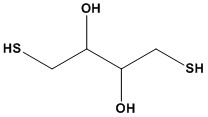
DTT
For Research & Development use only. Not for testing and/or use on humans.